

Kangaroo Mother Care: Bridging the Gap in Neonatal Care in Rural Uganda
In the heart of Oyam District, Uganda, St. John XXIII Hospital Aber is transforming neonatal care through a simple yet powerful practice known as Kangaroo Mother Care (KMC). Situated in Atapara Trading Center, the hospital serves a vast rural population. Premature birth and low birth weight are common challenges faced by many newborns in the region, with nearly 14% of infants in Uganda born with low birth weight and a neonatal mortality rate of 27 deaths per 1,000 live births, according to the Uganda Demographic and Health Survey report(UDHS). But there is hope.
Kangaroo Mother Care, a skin-to-skin care method, has become a vital intervention that is saving lives, reducing the risk of infant mortality, and empowering parents to be active participants in their newborns’ health.
What is Kangaroo Mother Care?
Kangaroo Mother Care is a practical, low-cost method where the baby is held in close, continuous skin-to-skin contact with their mother (or father). This technique offers warmth, encourages breastfeeding, and helps newborns develop more quickly—especially for those born prematurely or with low birth weight. It mimics the way a kangaroo nurtures its young in a pouch, hence the name.
At St. John XXIII Hospital Aber, KMC serves as a critical solution to improving the health outcomes of vulnerable newborns.
Why Kangaroo Mother Care Works
KMC offers a low-cost solution to preterm infant care, especially in resource-constrained settings like Oyam, where traditional incubators may not always be available or accessible. According to the World Health Organization (WHO), KMC can reduce neonatal mortality by up to 51% for infants weighing less than 2kg . St. John XXIII Hospital Aber continues to champion KMC as part of its commitment to improving maternal and child health outcomes in northern Uganda.
KMC’s effectiveness goes beyond just keeping the baby warm; it fosters an emotional bond between mother and child and stimulates breast milk production, which provides essential nutrients and antibodies. In addition to KMC, St. John XXIII Hospital Aber offers a range of neonatal services, including CPAP therapy, phototherapy for jaundice management, and blood transfusions, ensuring the best possible care for vulnerable newborns.
Why KMC is Crucial for Oyam District
In rural regions like Oyam, Uganda, healthcare facilities are often stretched thin, and access to specialized care can be a challenge. Premature births, which account for 13% of live births in Uganda, present a serious health risk to newborns, especially when advanced incubators or neonatal intensive care units are not readily available. According to the World Health Organization (WHO), premature birth complications are the leading cause of death among children under five years of age globally. This is where Kangaroo Mother Care comes in as a life-saving alternative. KMC provides:
- Natural warmth: In rural Uganda, where hypothermia is a significant risk for premature babies, KMC helps regulate the baby’s temperature naturally through skin-to-skin contact, eliminating the need for costly incubators.
- Better access to breastfeeding: Breastfeeding is one of the most effective ways to prevent infections and boost newborn immunity. KMC fosters early and frequent breastfeeding, which is essential in areas where access to formula and clean water is limited.
- Improved bonding and emotional support: KMC strengthens the bond between parent and child, a critical factor in regions where parents may feel overwhelmed due to limited resources and healthcare support.
How KMC is saving lives at St John xxiii Hospital Aber?
For babies born prematurely or with low birth weight, early intervention is key. Kangaroo Mother Care addresses some of the most pressing neonatal challenges, particularly in low-resource settings like Oyam. Research from the WHO shows that KMC can reduce neonatal mortality by up to 51% for infants weighing less than 2kg, a statistic with profound implications for communities where these vulnerable babies are at greater risk.
At St. John XXIII Hospital Aber, success stories highlight its profound impact on families in the community.
Success Story of Keila and her baby: A Prime Gravida Mother and Her Baby Who Survived Against All Odds
Meet Keila, an 18-year-old first-time mother, gave birth to a premature baby boy at just 30 weeks of gestation. The delivery occurred at home, assisted only by her mother. The newborn, weighing only 1.32kg, was delivered using rudimentary methods—his umbilical cord cut with a razor blade. Immediately after the birth, Keila rushed to St. John XXIII Hospital Aber, knowing her baby needed urgent care.

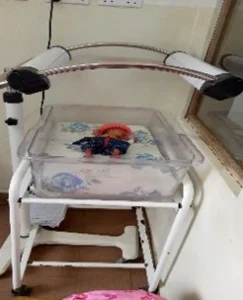
Upon admission to the hospital’s Neonatal Intensive Care Unit (NICU), the baby was in critical condition—hypothermic, pale, and struggling to breathe with an oxygen saturation of just 2%. Thanks to the swift intervention of the NICU team, the baby was placed under a radiant warmer, and after an hour of life-saving resuscitation, his condition began to stabilize. He was put on CPAP (Continuous Positive Airway Pressure), given antibiotics, and eventually received a blood transfusion to treat severe anemia. By the third day, his vital signs had normalized.
After a week of intensive care, the baby was weaned off oxygen and transitioned to Kangaroo Mother Care. Keila embraced this life-saving method, holding her baby skin-to-skin to provide warmth and comfort. Over the following weeks, the baby showed remarkable improvement, gaining weight and strength. By the third week, he had reached 1.6kg, and after further reviews, the hospital discharged Keila and her baby with follow-up care instructions.
Today, Keila’s son is a healthy 11-month-old, thriving thanks to the dedication of the NICU team and the effectiveness of Kangaroo Mother Care. Keila expressed her deep gratitude to the hospital staff for saving her baby’s life and providing comprehensive care that she never thought possible, all at an affordable cost. “We received comprehensive care and treatment, stayed for a long time, but paid little money—not worth the services we got”, she said with a smile.
St. John XXIII Hospital Aber’s Commitment to KMC
At St. John XXIII Hospital Aber, Kangaroo Mother Care is a core practice in our neonatal care unit. We have trained our staff to guide parents through the process, offering hands-on support and education. This ensures that even in a rural setting like Atapara, where healthcare resources may be limited, parents have the tools and knowledge to care for their newborns.
The success of Kangaroo Mother Care at our hospital is part of a broader effort to reduce infant mortality in Oyam and surrounding districts. Our hospital’s neonatal care program is built on the principle that even in low-resource settings, simple practices like KMC can make a profound impact.
The Impact of KMC on Our Community
The benefits of KMC extend beyond the neonatal period, contributing to the long-term health and development of children in our community. Babies who receive KMC at St. John XXIII Hospital Aber are more likely to:
- Gain weight faster, reducing the need for extended hospital stays.
- Have improved survival rates, especially in regions with limited access to healthcare facilities.
- Develop stronger emotional bonds with their parents, which enhances their overall well-being.
In Uganda, where neonatal mortality remains a significant challenge, practices like KMC can bridge the gap between high-tech care and the practical realities of rural healthcare. For our hospital and our community, it is a low-cost, high-impact solution.
Kangaroo Mother Care is more than just a practice—it’s a lifeline for newborns in rural Uganda. At St. John XXIII Hospital Aber, it is a beacon of hope for mothers like Keila, providing a simple yet powerful method to save preterm infants’ lives in low-resource settings. At St. John XXIII Hospital Aber, located in Atapara Trading Center, Oyam District, the hospital’s commitment to KMC and comprehensive neonatal care ensures that every newborn has a chance to thrive. By embracing this life-saving practice, we are creating a healthier, more hopeful future for families in Oyam and beyond.
For more information or to learn how you can support our neonatal care efforts, visit our hospital or contact us today.
Sources:
Uganda Demographic and Health Survey (UDHS)
World Health Organization (WHO) Kangaroo mother care: a practical guide
