
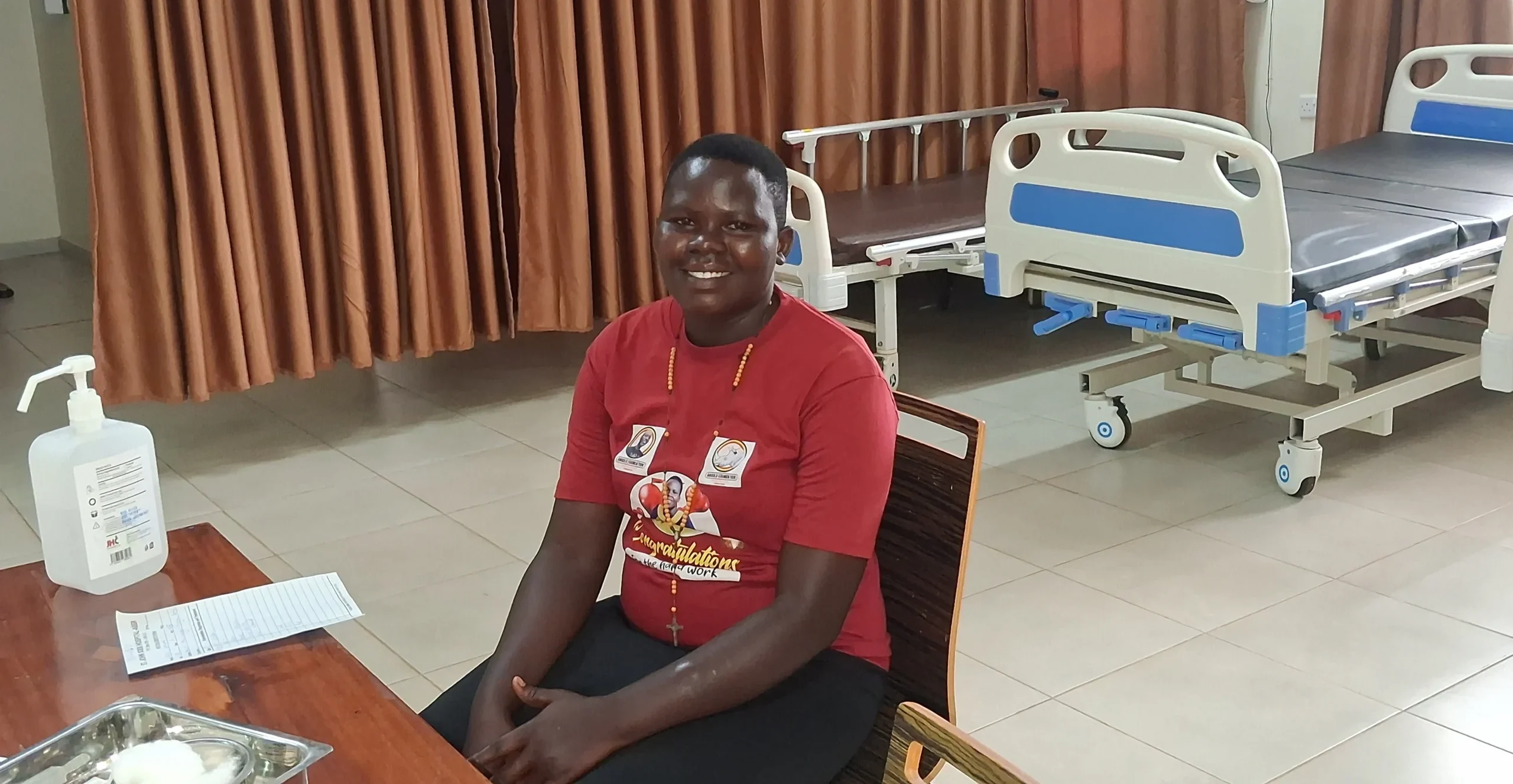
Akello Brenda, a young mother from Dokolo District, survived a life-threatening medical crisis following a stillbirth caused by preeclampsia. The condition led to acute kidney failure and severe anaemia, requiring urgent intervention. After referrals across several facilities, she received specialized treatment at St. John XXIII Hospital Aber.
Our medical team administered medication, eight sessions of peritoneal dialysis along with blood transfusions to restore Brenda’s health. Following successful treatment, her kidney function returned to normal. She now participates in a long-term follow-up program, highlighting the importance of early diagnosis and specialized care in managing complex emergencies.
Her Story: A Life Hanging in the Balance
In early January 2025, Akello Brenda , a 28-year old nursery school teacher from Amati Cell in Dokolo District, began experiencing chest pain and heartburn during an advanced stage of pregnancy. What she hoped would be a brief health concern quickly revealed itself to be far more serious.
A visit to Kwera Health Centre led to a devastating discovery: Brenda was suffering from preeclampsia, a dangerous condition of high blood pressure during pregnancy. An ultrasound scan delivered a heartbreaking second blow , her baby had died in the womb.
On 18th January 2025, Brenda delivered a stillborn baby girl. In the hours and days that followed, her own life hung in the balance. She became profoundly anaemic, her blood pressure remained dangerously elevated, severe oedema spread throughout her body, and her kidneys had stopped producing urine entirely.
The Clinical Crisis: When One Tragedy Became Two
The medical team at Kwera Health Centre worked urgently to stabilise Brenda, administering medication to manage her blood pressure and attempting to reverse her deteriorating condition. But her body was failing faster than it could be supported. With no improvement in her urine output and her anaemia deepening, she required a blood transfusion — and a level of specialised care beyond what the facility could provide.
She was urgently referred to Lira Regional Referral Hospital, and then transferred onward to Gift Life Medical Centre in Lira, where her condition was further assessed and managed. It was here that the full severity of her situation became clear: Brenda had developed acute kidney failure. Her kidneys had shut down entirely.
The clinical team at Gift Life recognised that she needed something very few facilities in the region can offer: peritoneal dialysis. She was immediately referred to Aber Hospital (St. John XXIII Hospital Aber) for specialist kidney care.
Admission at Aber Hospital: The Beginning of Recovery
Brenda was admitted to Aber Hospital on 25th January 2025, received into the maternity unit. She presented with a constellation of life-threatening conditions: high blood pressure, absent urine output, severe generalised swelling, and profound anaemia following delivery and blood loss.
The medical team moved quickly. A blood transfusion was initiated to address her anaemia and strengthen her for the intensive treatment ahead. Her blood pressure was actively managed and monitored around the clock. By 28th January — just three days after admission — she was stable enough to be transferred to the dialysis unit for kidney care.
Dialysis Treatment: Eight Sessions That Saved Her Kidneys
Between 28th January and 11th February 2025, Brenda underwent eight sessions of peritoneal dialysis, a procedure in which a cleansing fluid is introduced into the abdominal cavity to filter waste products from the blood when the kidneys cannot perform this function. Each session was carefully managed alongside her broader medication regimen and continuous monitoring by the specialist care team.
Peritoneal dialysis is a demanding process, requiring patience, precision, and close clinical oversight. For a young woman still recovering from childbirth and the grief of losing her baby, the physical and emotional demands were immense. Through it all, the Aber Hospital team remained by her side.
“They were nice to her, cared for her, and made her feel loved,” Brenda recalls. “They really wanted her to get well.”
Recovery and Discharge
By the time Brenda was discharged in February 2025, the results of her treatment were clear and measurable. Her urine output had returned to normal, a direct and critical indicator that her kidneys were functioning again. The severe swelling that had engulfed her body had resolved. Her blood pressure had stabilized within normal ranges. The crisis was over.
She left Aber Hospital not simply alive, but on a structured path to full recovery, enrolled in a two-year follow-up programme designed to monitor her kidney function, blood pressure, and overall health at regular intervals.
On going Follow up: Continuing Care Beyond the Ward
Since her discharge, Brenda has attended four follow-up review appointments at Aber Hospital. These reviews are part of her two-year post-treatment monitoring plan and are scheduled to continue through 2027.
Reviews completed to date:
- March 2025
- June 2025
- October 2025
- 5th May 2026
Each review has confirmed Brenda’s continued recovery and the sustained success of her treatment. Her case demonstrates not only the life-saving capability of peritoneal dialysis at Aber Hospital, but also the value of consistent, long-term follow-up care in ensuring patients maintain the health gains they worked so hard to achieve.
Brenda’s clinical timeline from diagnosis to recovery
Early Jan 2025
First Signs of Crisis
Chest pain and heartburn during pregnancy prompt Brenda’s first visit to Kwera Health Centre. Investigations reveal preeclampsia and intrauterine fetal death — the baby has died in the womb.
18th Jan, 2025
Stillbirth & Maternal Emergency
Brenda delivers a stillborn baby girl. In the aftermath, she develops severe anaemia, absent urine output (anuria), generalised oedema, and persistently high blood pressure. Stabilisation attempts at Kwera Health Centre are insufficient.
Late Jan, 2025
Escalating Referrals
Transferred urgently to Lira Regional Referral Hospital, then onward to Gift Life Medical Centre in Lira. Acute kidney failure is diagnosed. Specialist peritoneal dialysis care is identified as essential. She is referred to Aber Hospital.
25 Jan, 2025
Admission to Aber Hospital
Brenda is admitted to the maternity unit at St. John XXIII Hospital Aber presenting with the full constellation of her critical conditions. Blood transfusion is initiated and blood pressure management begins immediately.
28th Jan – 11th Feb, 2025
Eight Dialysis Sessions
Transferred to the dialysis unit, Brenda undergoes eight sessions of peritoneal dialysis under close specialist supervision. Each session is paired with ongoing medication, fluid management, and continuous monitoring.
Feb 2025
Discharge: Full Recovery Markers Met
Urine output normalises. Body swelling resolves. Blood pressure stabilises. Brenda is discharged in good health on a two-year structured follow-up programme.
2025 – 2027
Ongoing Follow-Up Reviews
Review appointments completed: March 2025, June 2025, October 2025, and 5th May All confirm continued recovery, stable kidney function, and good overall health. Monitoring continues.
Care That Goes Beyond the Clinical
When Brenda was asked about her experience at Aber Hospital, she spoke not just of treatments and procedures, but of people. Of being seen. Of being cared for as a human being in profound pain, not merely as a patient with a diagnosis.
In a moment of her deepest vulnerability, having lost her baby and facing the prospect of losing her own life, the warmth and professionalism of the Aber team made a difference that medicine alone cannot measure.
Personal Impact
Brenda’s experience at Aber Hospital touched her deeply, not only physically but emotionally. Coming to the hospital in one of the most vulnerable moments of her life, having just lost her baby and facing her own life-threatening illness, she found a care environment that treated her with warmth and genuine concern.
The most meaningful outcome of her treatment, in her own words, was simple: she is alive. She returned to her community, to her work as a nursery school teacher, and to her life, with functioning kidneys, stable health, and a story to tell.
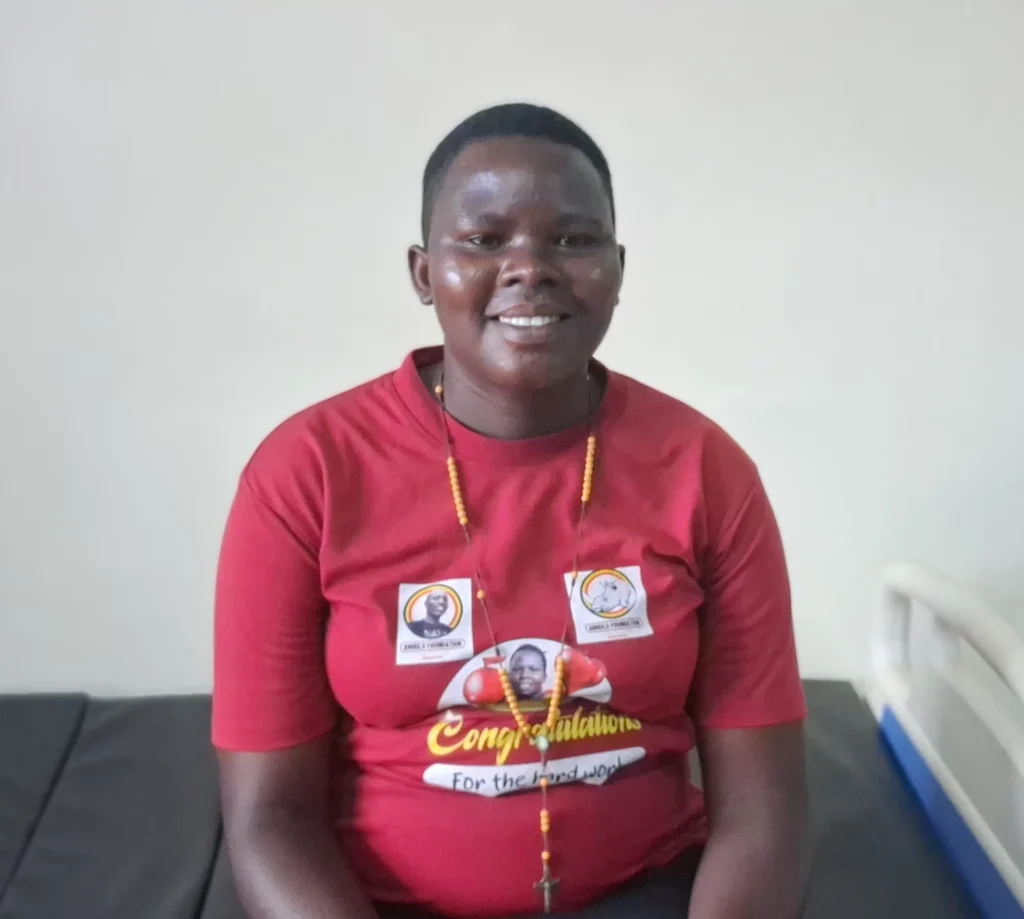
BRENDA’S ADVICE TO OTHERS “I would advise that person to visit the hospital early. Going to the hospital early means you can get urgent assistance and treatment before the situation moves to the chronic stage. Do not wait.” — Akello Brenda, Recovered Patient
Brenda’s message carries particular weight for communities in Dokolo District and across the Lango sub-region, where healthcare-seeking is sometimes delayed due to distance, cost, or the hope that symptoms will improve on their own. Conditions like preeclampsia and acute kidney failure can escalate rapidly into life-threatening emergencies. Early presentation to a health facility gives clinicians the best possible chance to intervene before the situation becomes irreversible.
